2026-11-06 · Fred Harlan
Clearing Storm Drains After Heavy Summer Rains in Gainesville
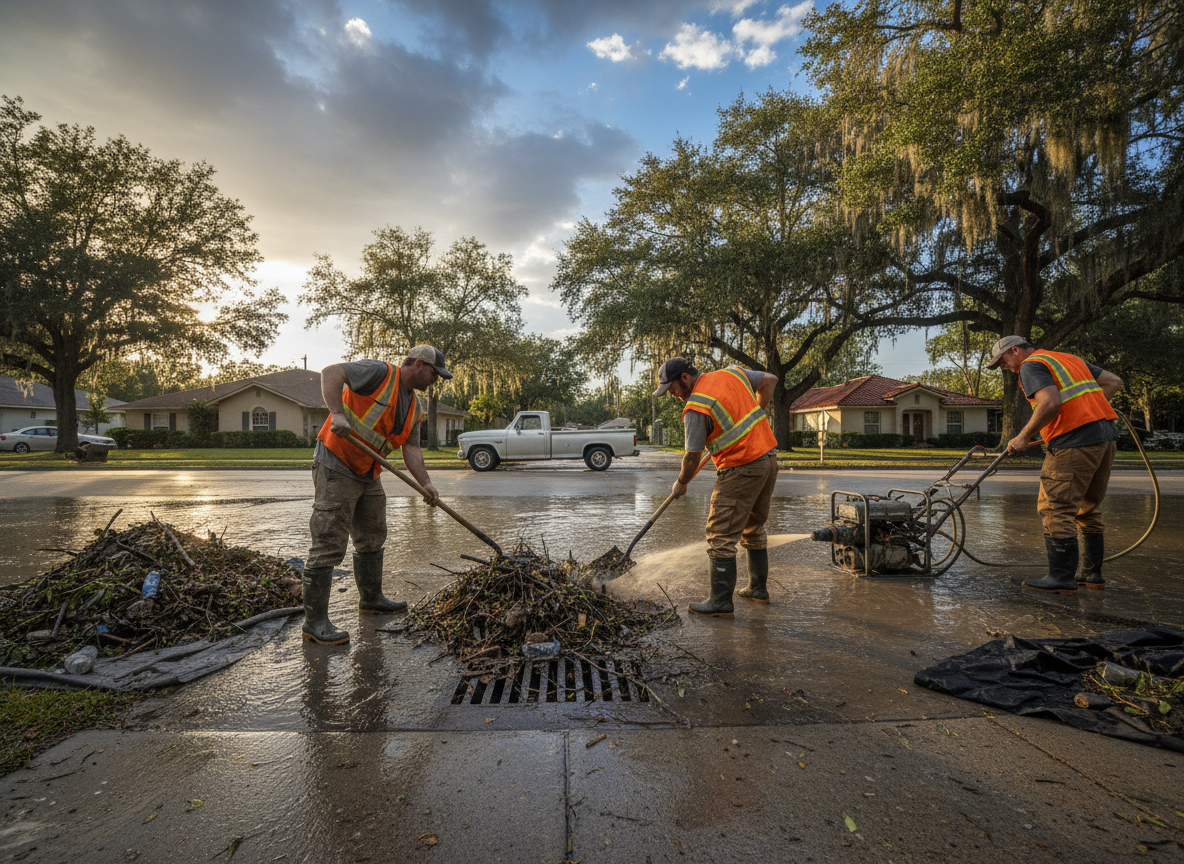
Gainesville storm drains typically clear with a combination of manual debris removal and high-pressure flushing within one to three hours when the blockage sits near the surface grate. In Alachua County the humid subtropical climate brings intense afternoon thunderstorms from June through September that drop several inches of rain in a single event, washing leaves, sediment, and trash into grates across University Heights, Duckpond, and Haile Plantation. Homeowners who act quickly after the rain stops prevent water from backing up into yards and driveways near Paynes Prairie Preserve State Park and Ben Hill Griffin Stadium.
Why Summer Rains Create Persistent Clogs in Gainesville
Gainesville receives an average of 50 inches of annual rainfall with the heaviest downpours concentrated in summer months. These storms wash large volumes of oak leaves, pine needles, and red clay soil into storm drain inlets throughout Northwest Gainesville and Magnolia Park. The flat terrain and older housing stock built before 1980 often feature smaller 12-inch to 18-inch drain pipes that fill faster than modern systems. When water sits for more than 24 hours, organic matter begins to decompose and bind with sediment, forming a dense mat that resists simple raking. Residents near the University of Florida campus see additional debris from construction sites and event traffic around Ben Hill Griffin Stadium that further narrows flow paths.
Tools and Safety Steps Before Starting Any Clearing Work
Begin by locating the nearest catch basin grate and removing loose surface debris by hand while wearing heavy gloves and waterproof boots. Use a sturdy garden rake or leaf scoop to pull out matted leaves and twigs without reaching deep into the pipe. Keep a 5-gallon bucket nearby to collect material so it does not wash back into the system during the next rain. Avoid standing in flowing water and never attempt to clear a drain during active rainfall. If the grate sits in a low-lying spot near Florida Museum of Natural History property or Paynes Prairie, watch for snakes and insects displaced by rising water. These precautions reduce the chance of slips or contamination before any deeper work begins.
Effective Clearing Techniques for Surface and Shallow Blockages
After surface debris is removed, insert a plumber's snake or 25-foot drain auger into the pipe opening and rotate clockwise to break up compacted sediment. Follow with a garden hose fitted with a jet nozzle to flush remaining particles downstream toward larger municipal lines. In neighborhoods such as Duckpond and University Heights, many inlets connect to 4-inch or 6-inch laterals that respond well to this two-step approach. Repeat the flushing process two or three times until water flows freely for at least five minutes. For stubborn clay buildup common in Alachua County soil, a wet/dry shop vacuum can extract standing water and loose material before the final rinse. Always direct the vacuum exhaust away from the work area to avoid spreading fine sediment.
When Professional Help Becomes Necessary
If water continues to pool after two hours of homeowner effort or the blockage lies more than 10 feet inside the pipe, contact a plumber for professional drain cleaning services. Persistent issues often trace to collapsed sections or root intrusion from mature live oaks that line streets in Haile Plantation and Magnolia Park. In these cases a camera inspection reveals the exact location and extent of damage before excavation begins. Homeowners in nearby Lake City or Ocala facing similar clay-heavy soils report that early professional intervention prevents larger backups into basements during subsequent storms. Emergency plumbing teams familiar with Gainesville terrain can arrive with hydro-jetting equipment capable of clearing 300 feet of line in under an hour when surface methods fail.
Preventing Future Clogs After Clearing Is Complete
Install a heavy-duty grate cover with 1-inch spacing over the inlet to block large debris while allowing rapid water entry. Schedule quarterly inspections in spring and fall, especially for properties bordering Paynes Prairie Preserve State Park where wildlife activity adds extra organic material. Keep nearby landscaping trimmed so grass clippings and mulch do not wash into the system during the next heavy rain. For homes in older sections of Downtown Gainesville, consider adding a small sediment trap upstream of the main line to capture red clay before it reaches the pipe. These steps reduce the frequency of full cleanouts and protect adjacent sewer infrastructure as detailed in discussions of main sewer line repair costs across Gainesville neighborhoods. Regular attention keeps residential storm drains functioning through the peak of Alachua County summer rainfall.